A Truck Oil Seal is a small component with a demanding job. It retains engine oil, axle lubricant, or transmission fluid around rotating shafts. It also blocks dust, water, and road grit. Under a truck, a failed seal may leave a dark, wet ring near the hub. That small stain can become a costly repair.
Grand View Research’s Automotive Seals Market report identifies rising commercial-vehicle production and replacement demand as important growth factors. MarketsandMarkets’ Automotive Seals and Gaskets Market report similarly highlights stricter efficiency requirements and longer service expectations. These findings matter because heavy trucks face heat, vibration, pressure, and uneven roads every day. Bharat Bhushan, a recognized tribology professor and author, defines the principle clearly: “A seal is a device that prevents the passage of fluids.” The practical details are less simple. A radial shaft seal, cassette seal, hub seal, and differential seal may look similar, yet their materials and installation methods differ. Nitrile rubber suits many conventional applications. Fluoroelastomer handles higher temperatures and harsher fluids. Polyurethane can resist abrasion, but it is not automatically the best choice.
Selection requires more than matching dimensions. Shaft speed, lubricant type, temperature, housing condition, and installation tools all deserve attention. Even reliable catalogs can oversimplify field conditions. That is worth remembering. This guide examines the main Truck Oil Seal types, their construction, operating limits, failure signs, and practical selection criteria.
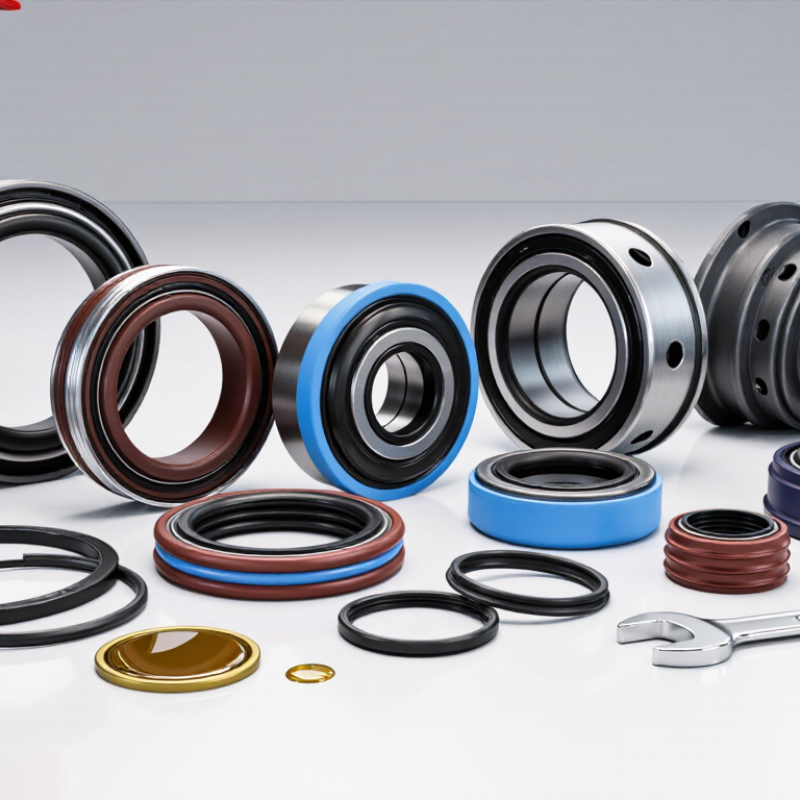
What Is a Truck Oil Seal and What Types Are Available?
Definition and Function of a Truck Oil Seal
A truck oil seal is a small sealing component that prevents lubricant from escaping around a rotating shaft. It also blocks dust, water, and road debris from entering mechanical assemblies. You may find oil seals in engines, transmissions, axles, hubs, and hydraulic systems.
Most oil seals use a flexible rubber or polymer lip. A metal case supports the seal, while a garter spring helps maintain contact with the shaft. During operation, the lip forms a narrow sealing line. This line must hold oil without creating excessive friction. A damaged seal may leave oil around the shaft, reduce lubrication, and accelerate bearing or gear wear.
Several types are available. Radial lip seals suit many rotating shafts and general oil-retention duties. Double-lip seals add a second barrier against contaminants. Some designs include dust lips for harsh road conditions. High-temperature materials support demanding engine areas, while reinforced seals handle pressure and vibration more effectively.
Material selection matters. Heat, shaft speed, lubricant type, and exposure to dirt all affect service life. During inspection, technicians should check hardening, cracks, grooves, and uneven wear. A seal can look acceptable yet leak after installation. Shaft surface condition matters too. A new seal cannot reliably correct a deeply worn shaft.
Installation also requires care. The seal should sit squarely, with its lip facing the retained fluid. Excessive force may deform the case or spring. Small details often decide whether the repair lasts.
It is a small barrier around a rotating shaft. It keeps oil or grease inside. It also blocks dust, water, and road grit.
They appear in engines, transmissions, axles, wheel hubs, and hydraulic systems. Each location may require a different design.
A flexible lip lightly contacts the shaft. This creates a thin oil film. The film reduces friction while limiting fluid escape.
Common parts include a sealing lip, metal case, garter spring, and outer rubber coating. The spring helps maintain shaft contact.
Radial seals suit many rotating shafts. Double-lip seals add contamination protection. Cassette designs provide several barriers for harsh road conditions.
Match the material with the oil, temperature, shaft speed, and dirt exposure. Nitrile suits moderate conditions. High-temperature materials handle tougher areas.
Look for oil around the shaft, a damp axle flange, hardened rubber, cracks, or uneven wear. A small leak can become expensive.
Not reliably. A deep groove may defeat a new seal. Check the shaft surface carefully before installation.
Installing the seal crooked, dry, or with excessive force can damage it. Keep the lip clean and lubricated. Avoid sharp tools.
No. Leakage may begin before the expected replacement date. Inspection remains important, though replacement schedules are still useful. I may underestimate hidden wear.
A Truck Oil Seal is a precision component designed to prevent lubricants from escaping and to keep dust, water, and other contaminants away from a truck’s moving parts. It is commonly installed around rotating shafts in engines, axles, transmissions, wheel hubs, and other mechanical assemblies. Its main parts typically include a sealing lip, outer casing, spring, and supporting structure. As the shaft rotates, the flexible lip maintains controlled contact with the surface, forming a barrier that supports proper lubrication and reduces the risk of premature wear.
Truck Oil Seals are available in several forms, including radial shaft seals, hub seals, axle seals, and specialized high-temperature or heavy-duty designs. Common materials include nitrile rubber, fluorocarbon rubber, silicone, and polyurethane, each offering different levels of resistance to heat, oil, pressure, and environmental exposure. Selecting the right seal requires checking the shaft size, housing dimensions, operating temperature, lubricant type, rotation speed, pressure, and working conditions. Proper compatibility and accurate installation are essential for reliable performance and extended component life.

 WEST INDUSTRY