Choosing the right Rear Brake Pads is a safety decision, not merely a maintenance purchase. Your vehicle’s weight, braking system, driving habits, and local climate all influence the correct choice. A compact car used in city traffic needs different performance from a heavy SUV towing a trailer.
Richard Reina, an automotive technical expert, offers a useful reminder: “Brake pads are a safety item, not a styling choice.” That idea deserves attention. Rear brakes may handle less braking force than front brakes, but they help stabilize the vehicle during stopping. Poorly matched pads can create noise, uneven wear, reduced braking confidence, or excessive dust on the wheels.
This guide explains how to compare Rear Brake Pads by material, friction performance, temperature range, noise control, and manufacturer specifications. It also considers electronic parking brakes, pad sensors, and compatibility with rear rotors. Check the owner’s manual first. Then compare the pad’s part number with a trusted catalog.
Look closely.
A low price can appear attractive at the counter. However, installation quality, rotor condition, and correct bedding procedures also affect real-world results. I should admit one limitation: no single pad suits every driver. Ceramic pads may run cleanly, while semi-metallic pads can offer stronger heat tolerance. Neither option is automatically best.
The safest decision combines verified fitment, reputable testing, professional inspection, and honest evaluation of your driving environment. A quiet pad is not always the strongest pad. A premium label is not proof by itself. Careful selection matters more than confident marketing.
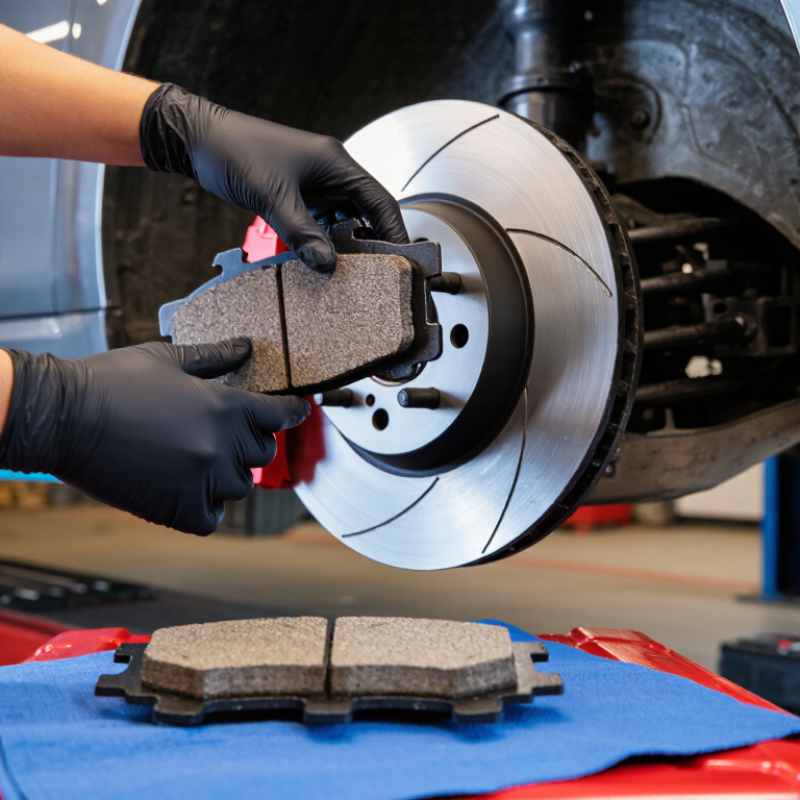
Rear brake pads do more than slow the rear wheels. During braking, weight shifts forward, so the front axle carries greater force. Rear brakes still stabilize the vehicle and support ABS and electronic stability control. Rear brakes still matter. The IIHS reports that electronic stability control reduces fatal single-vehicle crash risk by about 49%. Correct rear-pad performance helps these systems work predictably.
Common pad types include ceramic, semi-metallic, low-metallic, and organic compounds. Ceramic pads usually produce less dust and operate quietly, but they may cost more. Semi-metallic pads tolerate heat well and suit demanding driving, although they can increase noise and rotor wear. Organic pads feel smooth, but high temperatures can reduce their consistency.
According to FMVSS No. 135, regulated vehicles must meet specific braking performance tests. That requirement does not make every replacement pad equal.
Choose pads matching the vehicle’s specification, load rating, climate, and driving habits. Inspect the rotor, caliper slides, clips, and parking-brake mechanism together. A worn pad beside a glazed rotor is not a complete repair. In workshop inspections, uneven rear wear often points to seized hardware, not poor friction material. Do not guess. The National Highway Traffic Safety Administration recorded 40,901 U.S. traffic deaths in its 2023 Traffic Safety Facts report. That figure reinforces the value of documented inspections and properly bedded pads. I would also question unusually cheap parts; lower price can hide weaker testing, but price alone proves nothing.
2026 How to Choose Rear Brake Pads for Your Vehicle?
Checking Vehicle Compatibility, Pad Specifications, and Brake System Requirements
Choosing rear brake pads starts with exact vehicle compatibility. Check the model year, engine, body style, and rear axle application. A similar-looking pad may still have different mounting points or thickness. The vehicle identification number can help confirm the correct application. Your service manual remains valuable, especially for less common configurations.
Measure the pad and inspect its shape. Compare the backing plate, wear sensor position, friction surface, and retaining clips. Rear pads may also work with an electronic parking brake. That system can require a service mode before removal. Do not force the caliper piston. It may damage the actuator or create uneven braking. Small details matter.
Friction material should match your driving conditions and brake system requirements. Ceramic, low-metallic, and semi-metallic compounds can differ in noise, dust, heat tolerance, and pedal feel. Check the manufacturer’s stated operating range and required rotor condition. A new pad cannot correct a deeply scored or excessively thin rotor. I once trusted a visual match too quickly; the fit looked right, but the sensor location was wrong. That mistake reinforced a useful habit: verify every dimension before installation. After fitting the pads, inspect hardware, confirm fluid levels, and perform a controlled bedding procedure on a safe road. If the parking brake or ABS warning remains active, stop driving and seek qualified inspection.
Choosing rear brake pads in 2026 requires more than matching a part number. Friction material affects noise, dust, pedal feel, and stopping consistency. Ceramic-based pads often run quietly and create less visible dust. Semi-metallic materials may provide stronger heat control during repeated braking. Organic compounds can feel smooth, but they may wear faster under demanding use. Actual performance depends on the vehicle, rotor condition, and pad formulation.
Driving conditions matter just as much. Daily city traffic creates frequent heat cycles and short stops. A pad with stable low-temperature friction may suit this use. Mountain roads need dependable fade resistance and predictable control. Towing adds weight and heat, so the rear system needs a properly rated performance level. Do not choose the most aggressive pad automatically. It can increase noise or rotor wear. I have found that “better” often means better matched, not simply stronger.
Tips: Check the vehicle manual and the pad’s tested temperature range. Inspect rotor thickness before installation. Replace pads as a complete rear-axle set. Follow the bedding procedure carefully, using several moderate stops. Avoid hard braking during the first miles. Listen for scraping, vibration, or a changing pedal. These signs deserve inspection, even when the pads are new. My own judgment has sometimes improved after one overlooked detail: the driver’s route is part of the brake system.
Choosing rear brake pads requires more than matching shape and price. Quality begins with consistent friction material, a firm backing plate, and accurate fit. During inspections, I check for uneven wear, loose shims, and rough pad edges. These details can cause vibration or delayed braking. A reputable testing standard also matters because laboratory results support safer, more reliable decisions.
Noise control deserves practical attention. Chamfered edges and properly fitted shims can reduce squealing, especially during light braking. However, a quiet pad is not always the best pad. I have seen silent pads wear quickly in heavy traffic. Durability depends on driving habits, vehicle load, temperature, and rotor condition. A pad lasting longer may still perform poorly if the rotor is deeply scored.
Tips: Compare friction ratings, check the correct rear axle fit, and inspect the rotors before installation. Choose materials that balance dust, heat resistance, and stopping consistency. Low-metal formulas may reduce noise and airborne particles, while some other materials tolerate heat better. Dispose of worn pads through approved collection services. My own judgment is not perfect; road tests, maintenance records, and professional measurements should challenge assumptions.
| Rear Brake Pad Type | Pad Quality and Friction Behavior | Noise Control | Durability and Rotor Effect | Environmental Impact | Best-Suited Driving Conditions |
|---|---|---|---|---|---|
| Ceramic | Stable friction in normal road use and good resistance to brake fade during repeated moderate stops. Usually produces a smooth pedal feel, but performance varies by vehicle-specific formulation. |
Very Good Generally low squeal and low vibration when correctly bedded and fitted with suitable shims. Noise can still occur if the caliper, hardware, or rotor is worn. |
Typically offers long service life in normal passenger-car use and tends to generate less visible dust. Usually causes relatively low rotor wear, although some formulations may be less suitable for heavy towing. | Often uses less copper than older friction formulations, but the environmental profile depends on the exact ingredients. Low dust does not mean zero particulate emissions. | Daily commuting, mixed urban and highway driving, family vehicles, and drivers prioritizing cleanliness and quiet operation. |
| Low-Metallic NAO | Contains a small amount of metal fiber to improve heat transfer and initial bite. Provides a balanced combination of braking response and everyday performance. |
Good Usually quieter than semi-metallic pads, although occasional noise may occur in cold or damp conditions. |
Commonly provides good wear resistance and heat management. Rotor wear and dust levels are generally moderate and depend on the metal content and rotor condition. | May provide a useful balance between service life and material efficiency. Select formulations designed to meet applicable copper-reduction requirements to help reduce aquatic contamination. | General-purpose vehicles, varied climates, moderate traffic, and drivers seeking a balanced replacement option. |
| Semi-Metallic | Usually offers strong initial bite, good heat tolerance, and reliable performance under demanding conditions. The higher metal content can make the pad feel more responsive but may increase harshness. |
Fair to Good More likely to produce squeal, vibration, or operating noise than ceramic or NAO pads unless the hardware and bedding process are ideal. |
Often durable under heavy braking, towing, mountainous routes, and performance-oriented use. Can produce more dust and may contribute to greater rotor wear than softer formulations. | Higher metal content can increase particulate residue and may raise environmental concerns depending on the formulation. Prefer products that disclose low-copper or copper-free material content where required. | Heavy vehicles, frequent high-load braking, towing, steep roads, and applications where heat resistance is more important than quietness. |
| NAO / Organic | Generally provides smooth engagement and comfortable low-temperature braking. It may wear faster and lose performance sooner under sustained high heat than more metal-rich formulations. |
Very Good Often quiet and gentle in normal use, but noise control depends strongly on the backing plate, shims, caliper movement, and installation quality. |
Usually has a softer friction material, which can mean shorter pad life in heavy traffic or high-load applications. Rotor wear is often comparatively low, but dust may be more noticeable. | Material composition varies widely. Avoid assuming that “organic” automatically means environmentally preferable; check copper content, hazardous-material declarations, and disposal guidance. | Light-duty cars, low-speed urban driving, older vehicles designed for organic formulations, and comfort-focused applications. |
Choosing, installing, and maintaining rear brake pads safely requires more than matching a shape. Check the vehicle’s exact year, model, engine, rear brake type, and approved friction specification.
NHTSA’s National Motor Vehicle Crash Causation Survey identified brake-related problems in about 2% of investigated crashes where a vehicle factor was critical. That figure is not huge, but it is serious enough to reject guesswork. Choose pads with documented testing, correct thickness, and compatible hardware. Ceramic, low-metallic, and semi-metallic materials behave differently in noise, dust, heat, and wet conditions.
Installation demands clean hands and careful measurements. Support the vehicle with rated stands, not a jack alone. Compare the new pad with the old one before removing anything. Clean the caliper bracket, lubricate only approved contact points, and never contaminate the friction surface. Replace damaged clips and inspect the rotor for deep grooves, blue heat marks, or excessive wear.
The uncomfortable part: a pad can look acceptable while its friction material is separating. Look closely.
After fitting, pump the brake pedal until firm. Perform a controlled bedding procedure on a quiet road, following the pad maker’s instructions. Avoid heavy braking immediately afterward. SAE J2784 provides dynamometer test guidance for passenger-car friction materials, but laboratory performance cannot replace correct installation.
Recheck wheel torque and watch for pulling, scraping, vibration, or a burning smell. A short inspection may prevent a much longer stopping distance.
Match the exact year, model, engine, rear brake type, and approved friction specification. Do not match shape alone. Check the manual and documented test information.
Ceramic-based pads often run quietly and produce less visible dust. Stable low-temperature friction can help during frequent short stops. Actual results vary with the vehicle and rotor condition.
They may control heat strongly during repeated braking. Mountain roads require predictable control and fade resistance. Towing adds weight and heat, so use a properly rated performance level.
No. Stronger friction is not automatically better. Aggressive pads may increase noise or rotor wear. A better choice is usually better matched to your route.
Check rotor thickness, deep grooves, blue heat marks, and excessive wear. Inspect clips and contact hardware too. A pad may look acceptable while its friction material separates.
No. Support the vehicle with properly rated stands. Use clean hands and approved lubricant only on contact points. Never contaminate the friction surface.
Pump the brake pedal until it feels firm. Then follow the controlled bedding procedure on a quiet road. Use several moderate stops. Avoid hard braking during the first miles.
Watch for scraping, vibration, pulling, a changing pedal, or a burning smell. Recheck wheel torque. New parts can still reveal overlooked problems.
Choosing the right Rear Brake Pads is essential for maintaining reliable stopping performance, balanced braking, and overall vehicle safety. This guide explains the main types of rear brake pads and how their design affects heat control, braking response, comfort, and everyday usability. It also emphasizes the importance of confirming vehicle compatibility, including the correct dimensions, backing plate design, friction rating, and brake system requirements before making a purchase.
Drivers can compare friction materials and performance levels according to traffic conditions, climate, load, and driving habits. The guide also covers quality indicators such as noise reduction, vibration control, wear resistance, dust production, and environmental considerations. Safe installation requires clean contact surfaces, correct fitting, and careful inspection of related brake components. After installation, proper bedding-in and regular maintenance help ensure consistent performance, extend pad life, and identify wear or braking problems before they become serious.

WEST INDUSTRY