Choosing the China Best Dump Truck Brake Pads Supplier? That decision deserves more than a low quotation or polished factory photos. Heavy-duty trucks work under extreme loads, steep gradients, dust, water, and repeated braking. Their brake pads must manage heat without losing friction or damaging the rotor.
A dependable supplier should explain friction coefficients, operating temperatures, wear rates, backing-plate strength, and exact vehicle fitment. Ask for batch records, material data, inspection reports, and practical test results. ISO 9001 certification can support process control, but it does not prove every pad performs well. Market-specific approvals, such as ECE R90 where applicable, must also be verified for the intended vehicle and region.
“Stopping performance begins with consistent friction, not marketing claims,” says brake engineer James Walker Jr., a widely recognized automotive braking educator. This principle matters when comparing Dump Truck Brake Pads for mining fleets, construction vehicles, and long-haul operations. A pad that feels acceptable during a short test may fade after repeated downhill stops.
Heat leaves evidence.
Look for uneven wear, blue rotor marks, cracked friction material, or excessive dust. These details reveal problems that brochures often hide. Supplier audits, sample testing, and field feedback create stronger evidence than promises alone. Still, no supplier is perfect. Product quality may vary between batches, and even a capable factory can miss a specification.
The best purchasing decision combines engineering review, transparent communication, stable production, and realistic fleet testing. Cost matters, but predictable braking matters more. A careful supplier earns trust through measurable performance, not impressive words.
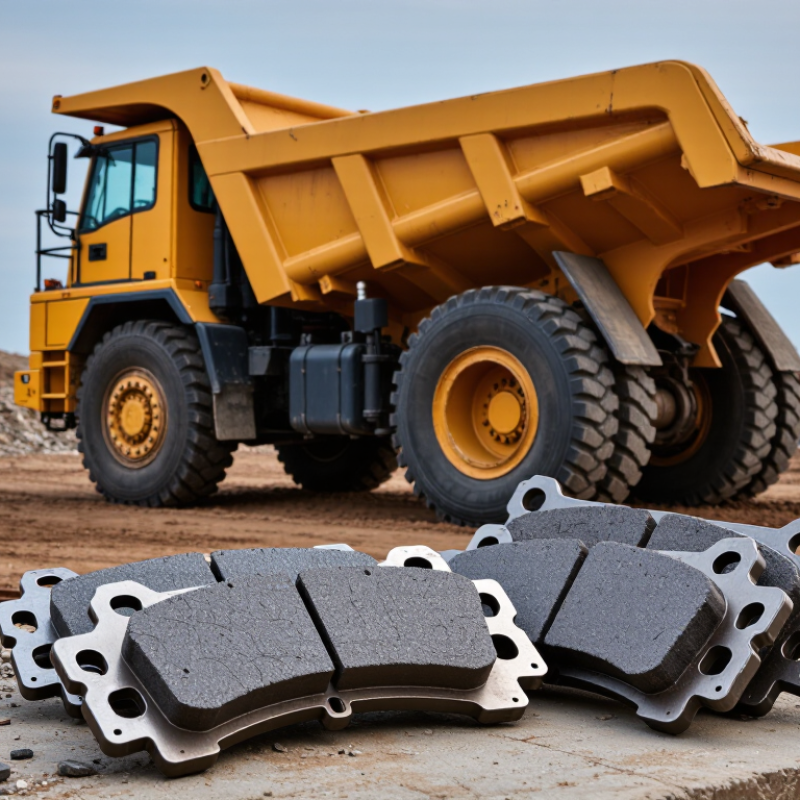
For dump trucks, GB 12676-2014 evaluates braking performance at the vehicle-system level. It is not simply a pad-only approval document. Brake pads must work with the caliper, disc, axle load, and hydraulic or pneumatic system. A reliable supplier should explain this connection clearly. Vague claims are not enough.
Testing may examine service braking, parking performance, repeated applications, and braking after heat buildup. Engineers should compare stopping behavior under loaded and unloaded conditions. They should also review friction data, wear patterns, operating temperature, and lining thickness. Test records need traceable batch numbers, drawings, material information, and installation instructions. Small details matter.
A practical inspection begins with the actual dump-truck axle and duty cycle. Quarry roads create dust, vibration, steep descents, and frequent heat cycles. The correct pad must remain stable under these conditions. Laboratory data alone may not represent field use. That is a weakness worth admitting. Supplier evaluation should include accredited testing evidence, production consistency, sample checks, and technical support. Compliance should be verified against the current standard text and applicable certification requirements, not copied from an old product sheet. Errors can happen. Transparent records make them easier to find and correct.
It examines friction stability, wear, heat response, recovery, and repeated braking performance. Cold stops matter. Hot stops matter too.
Quarry roads and steep construction slopes can make brake surfaces extremely hot. Excessive heat may reduce friction and increase stopping distance.
Engineers measure material loss, surface damage, mechanical strength, and dimensional changes. The pad should maintain reliable disc or drum contact.
It measures the distance from brake application to a complete stop. Engineers also check vehicle stability, control, and repeated braking consistency.
Tire condition, air pressure, axle loading, brake adjustment, and pavement surface can change results. A loaded dump truck may behave differently from an empty one.
No. Laboratory tests cannot fully copy dust, water, steep slopes, or uneven loads. Real roads are less polite.
Request recent batch tests, material traceability, retained-sample records, and equipment calibration details. Useful tests include friction, shear strength, compressibility, hardness, and wear.
Each lot code should connect to raw materials, production dates, equipment, inspectors, and test results. The records should be easy to locate. Minutes, not days.
One attractive report may not represent normal production. Comparing three batches reveals variation and exposes unexplained gaps. Certificates are not the whole truth.
Choosing the right Dump Truck Brake Pads requires more than comparing prices. In China, compliance begins with GB 12676-2014, which defines essential requirements for braking performance, friction stability, durability, and safety. Specifications should also match the axle configuration and operating conditions of 6×4 and 8×4 dump trucks, including load capacity, pad dimensions, friction range, and thermal resistance. Proper matching helps maintain consistent braking performance during heavy hauling and frequent stop-and-go operation.
For replacement applications, ECE R90 provides a structured framework for evaluating friction behavior, wear, temperature response, and safety consistency. FMVSS 121 further focuses on heavy-truck stopping performance, including controlled tests at 60 mph. A reliable supplier should support its claims with IATF 16949-based quality management, documented batch testing, material inspection, production records, and full product traceability. These details help fleet operators assess quality objectively and select brake pads suited to demanding commercial transport conditions.

 WEST INDUSTRY